What Makes an Onboarding Sticky?
It's simple. Give value, immediately. One new step in onboarding, no trade-offs, macro-level impact. Here's how.
Impact
+15.2%
Purchase conversion
+26.5%
Post sign-up purchases
+28.8%
Predicted LTV
+33.6%
Initial revenue
Context & Problem
Users sign up for a YouTube growth platform wanting views and subscribers. Motivation peaks at onboarding. But we can’t fabricate engagement, so the question is: what real value can we deliver at that moment?
The existing flow didn’t try. Users connected their YouTube channel, an act of real trust, handing a third party access to their content, analytics, and livelihood. Then they hit a paywall. No proof. No value. Just a price tag.
30% of monthly paid conversions happen during this onboarding upsell. The intent was there. We just weren’t capitalizing on it.
My philosophy: get the user to the wow moment faster. Value first, ask second.
My Role & Approach
I owned signup through first upsell.
On YouTube, video packaging (title + thumbnail) drives clicks. Best practices shift every few months. Small creators, our core signup audience, rarely know what a strong title looks like. Many joined specifically to learn.
We had a feature called Optimize that scored and improved video titles. It was one of our strongest tools. The idea: bring that value into onboarding, before the paywall.
Two weeks on design thinking: what can we deliver reliably? What gives a genuine wow moment? This was mid-2025, still doing traditional PM work with PRDs. Today I’d compress design and build into one week. But getting the thinking right mattered here. We thought carefully and one-shotted it.
One week building with one engineer. I was in the code myself using Sonnet 4 and Opus 4 to accelerate. Product-accelerated development before it had a name.
Process & Decisions
The control flow
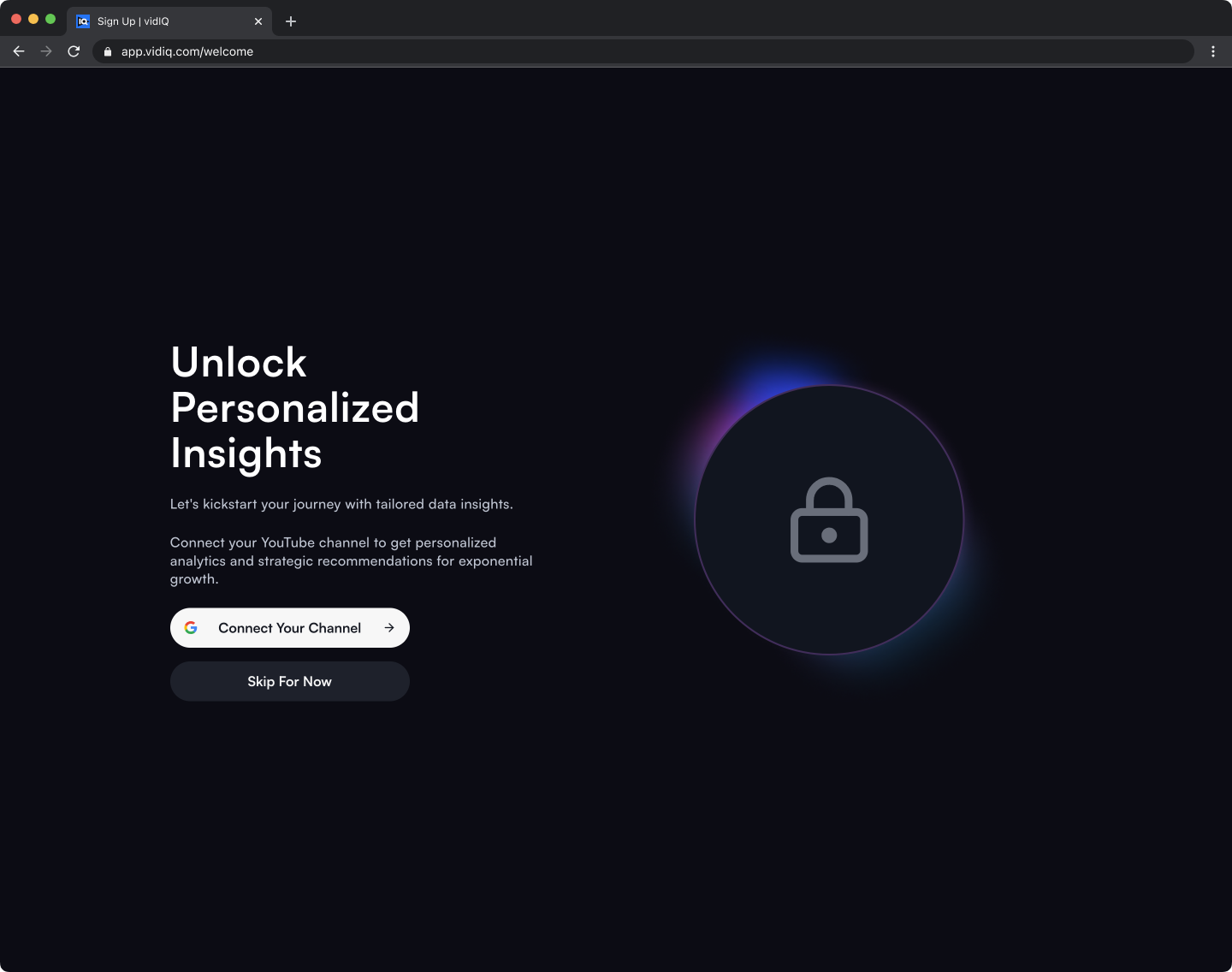
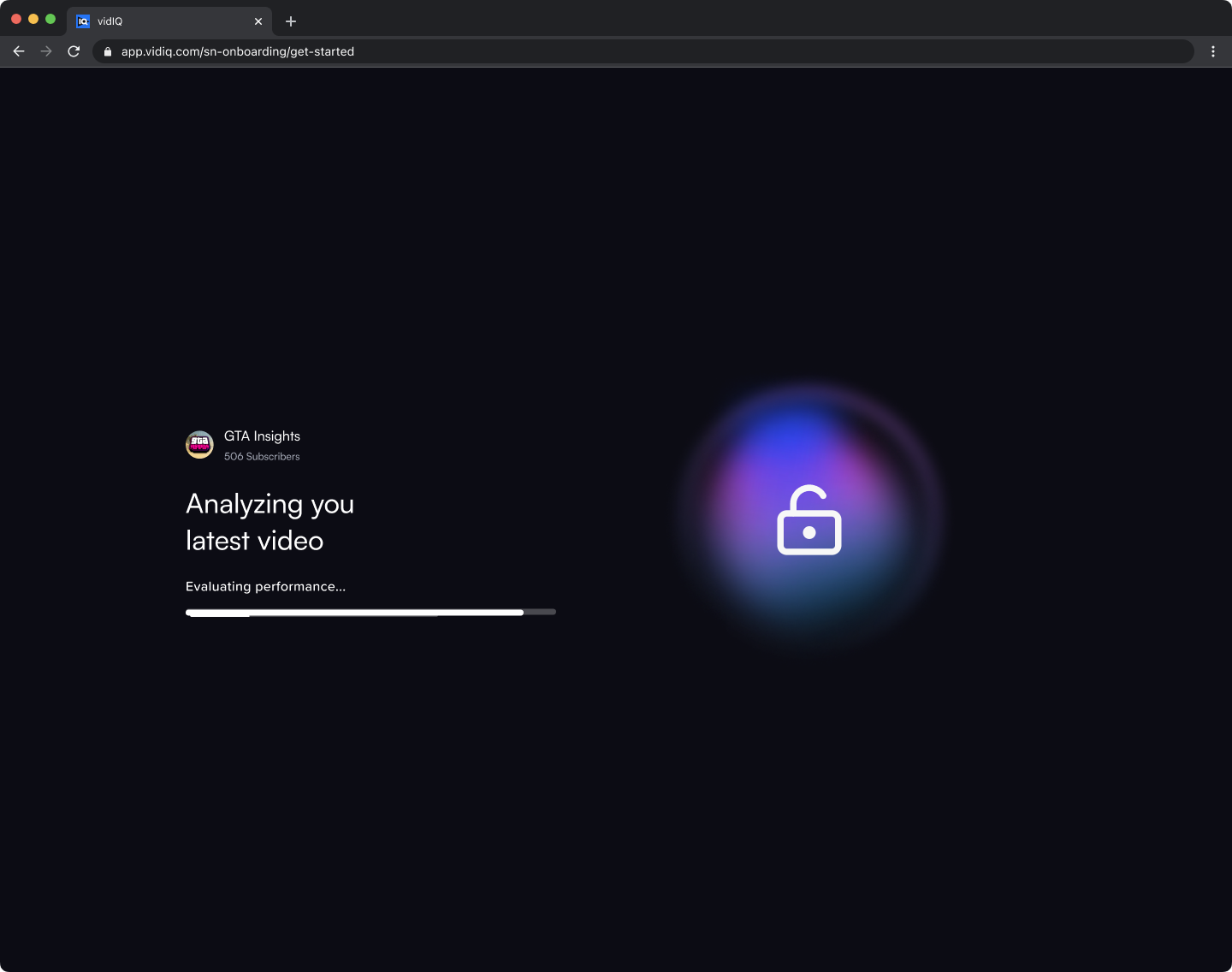
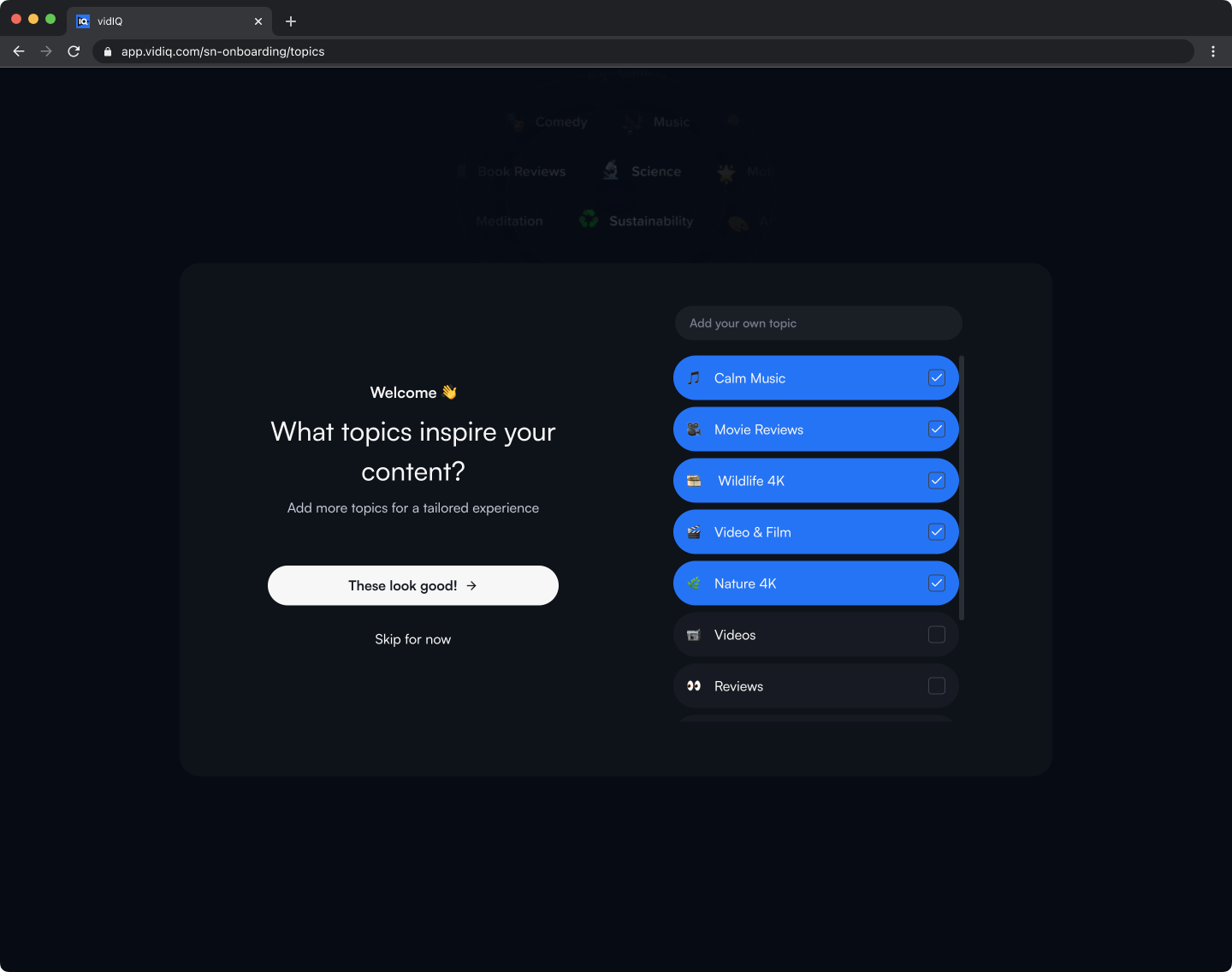
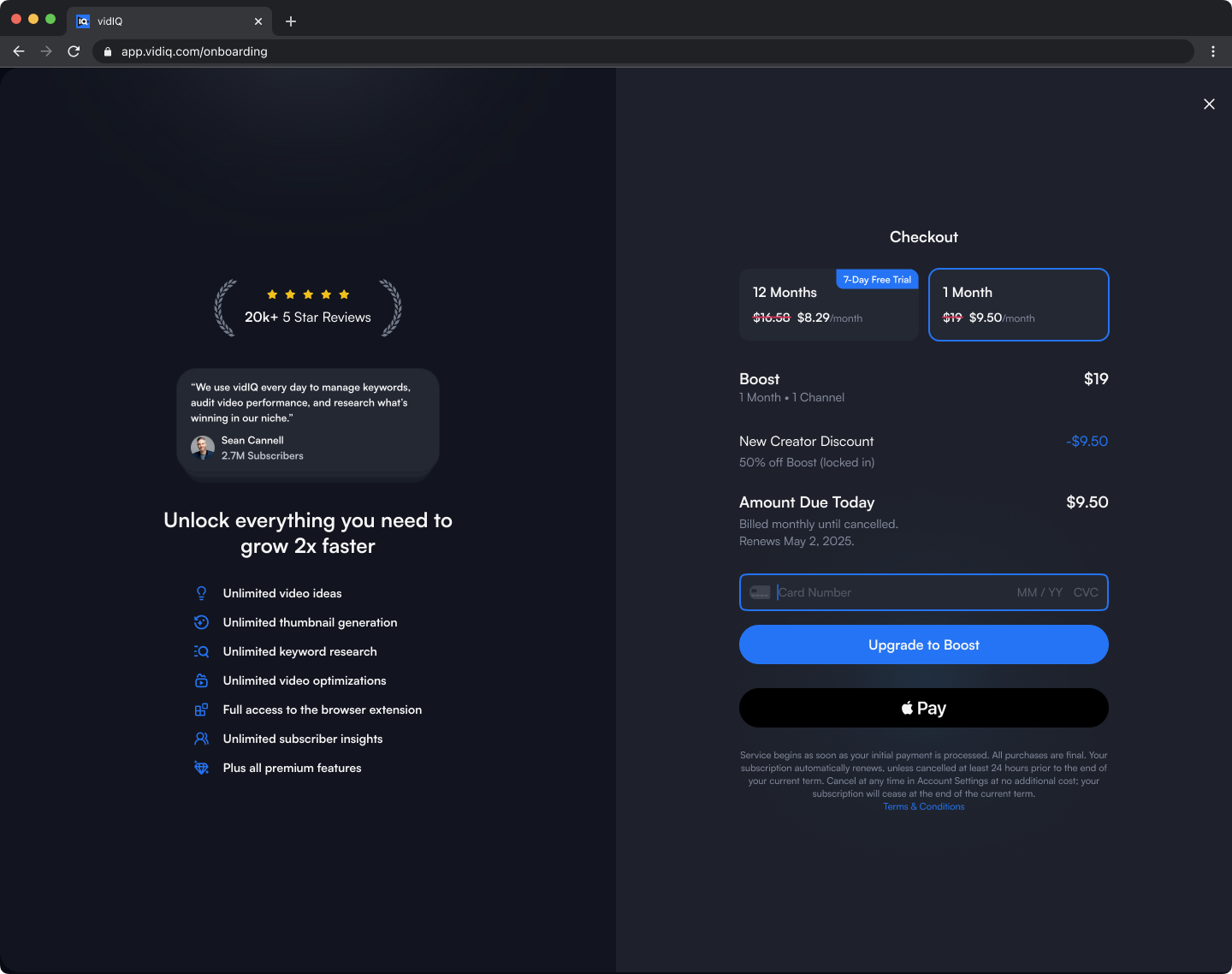
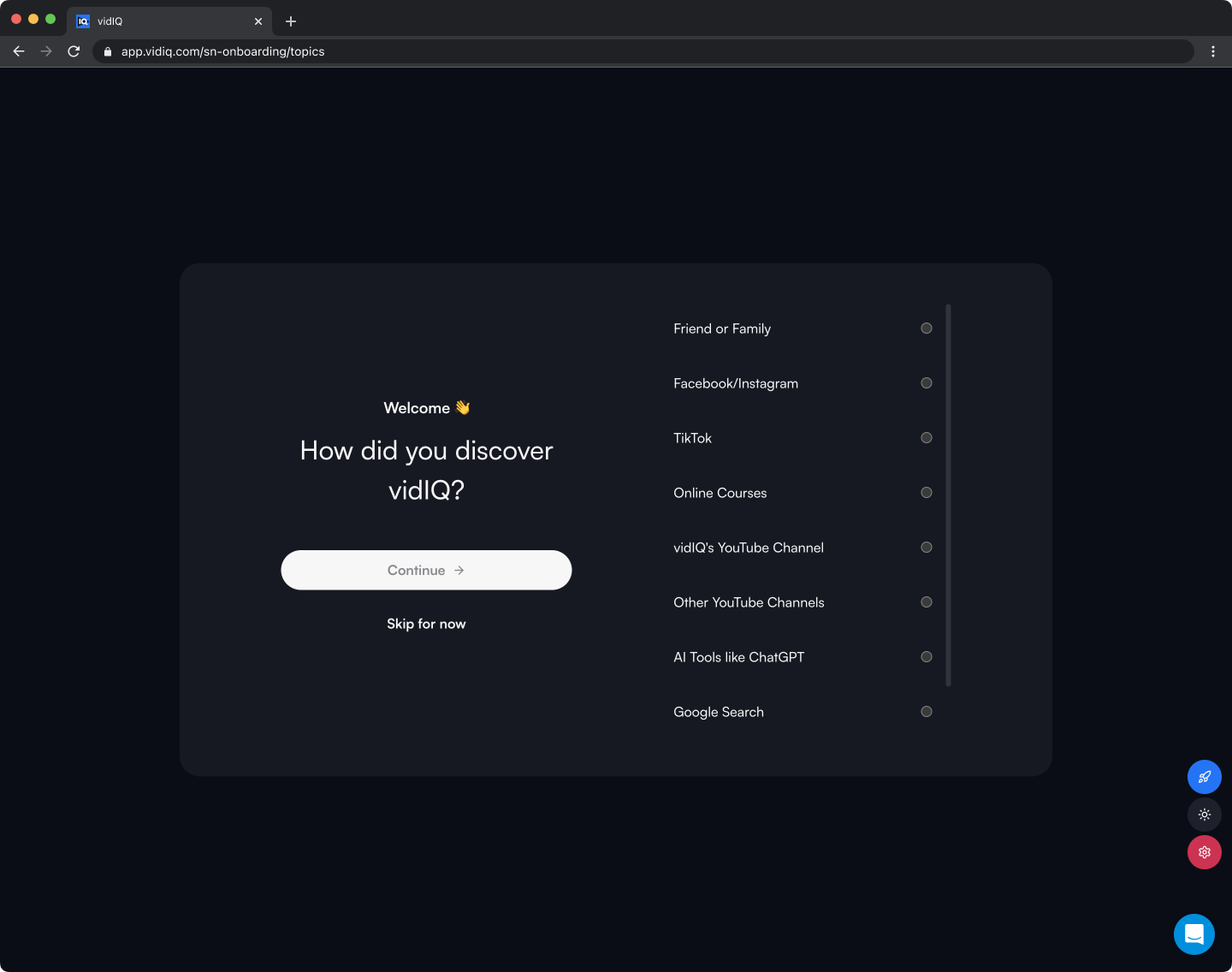
Connect. Analyze. Topics. Paywall. Survey. No value delivered.
The variant flow
One step added before the upsell:
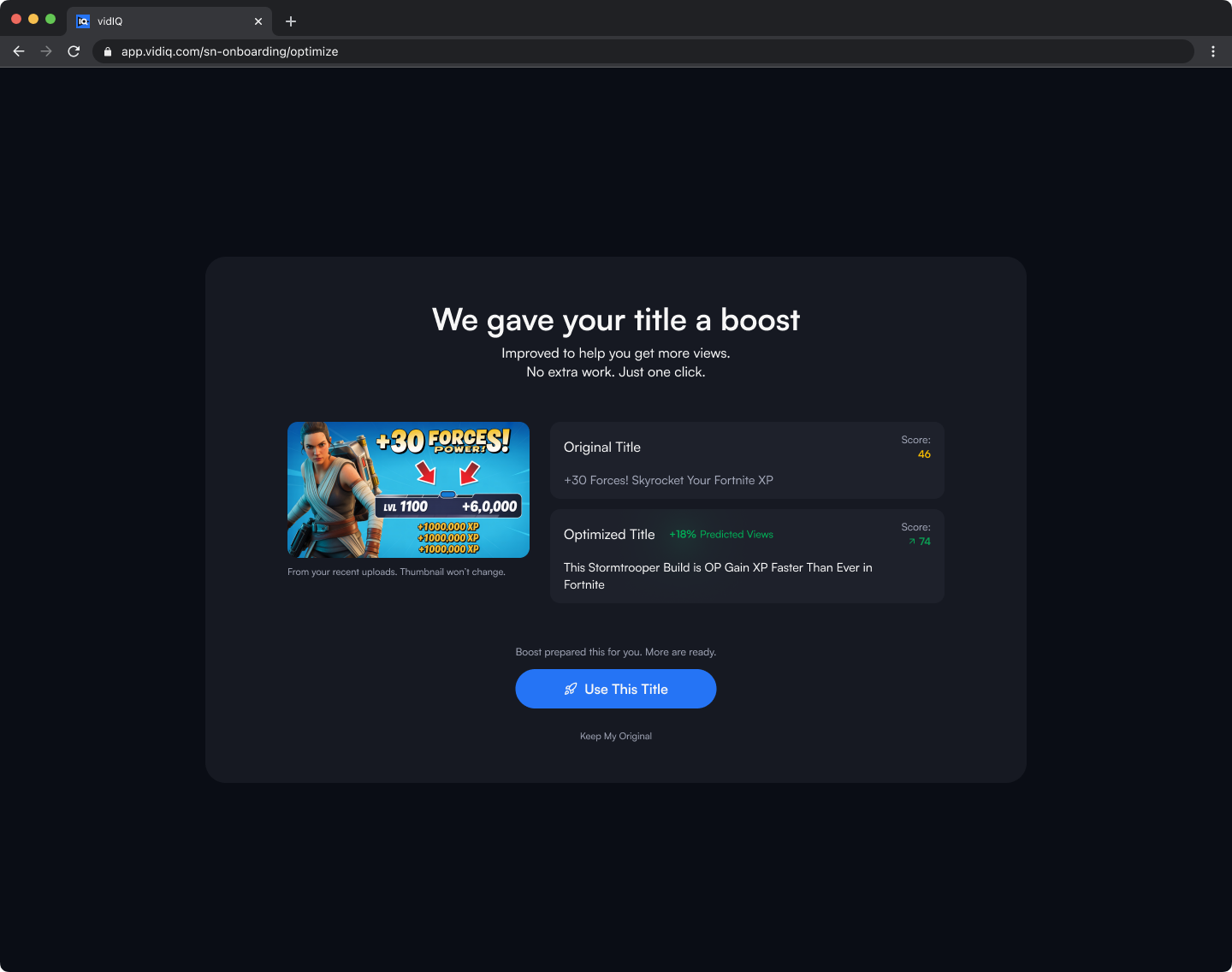
The new step up close:
We pull their latest video, score the current title, generate an optimized version with a higher score. User sees both titles and both scores side by side. One click to apply.
They can read the difference. The scores confirm it. Qualitative and quantitative proof of value, before we ask for anything.
Then the upsell: we did this in seconds, for free. Imagine what we can do if you pay.
What I said no to
Thumbnails. We explored including thumbnail generation alongside titles.
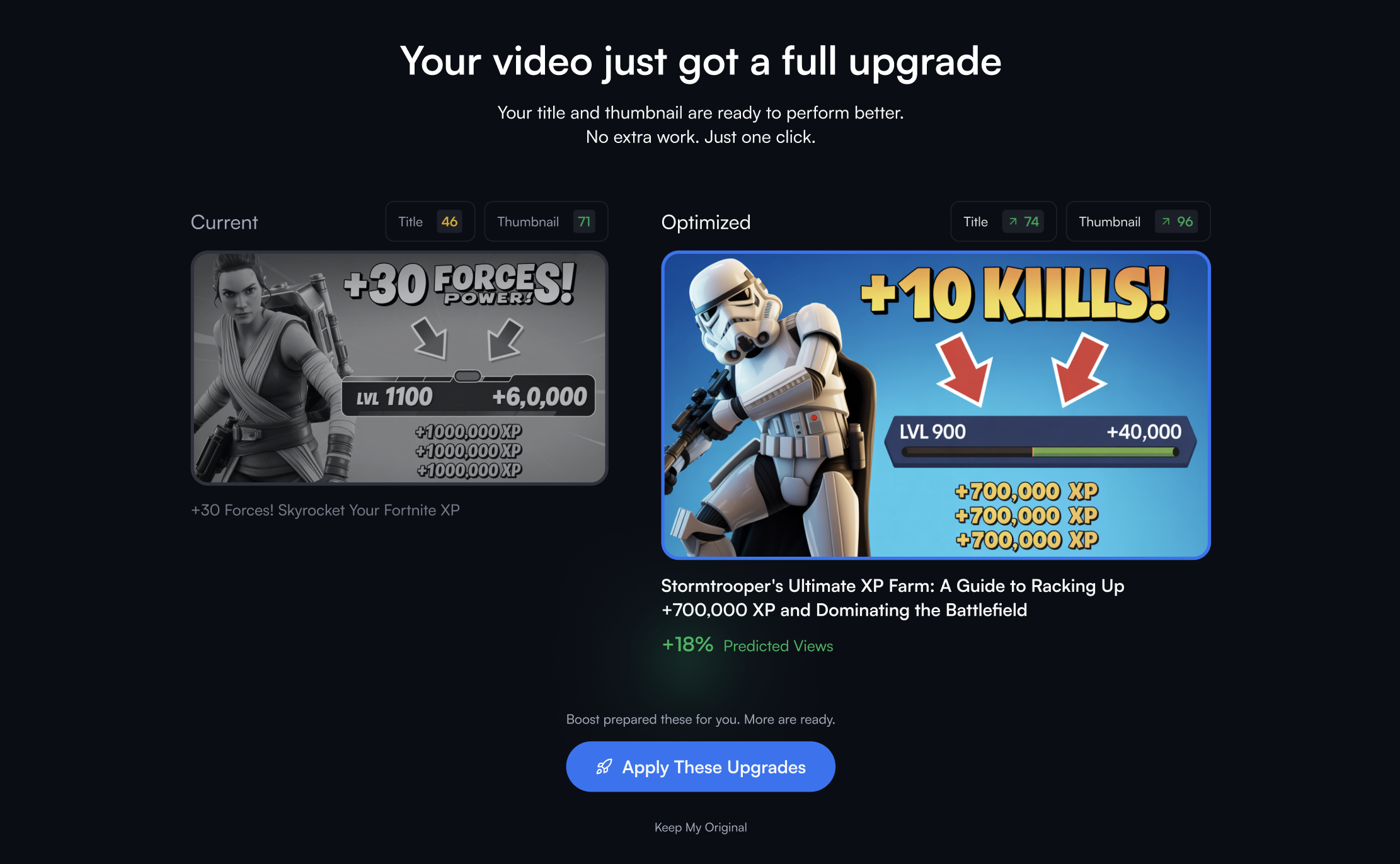
Early design exploration with thumbnail scores alongside titles.
Thumbnail generation at the time was hit or miss. Couldn’t reliably one-shot a good thumbnail without user input. In onboarding you get one chance. A bad thumbnail right after someone trusts you with their channel damages that trust. Titles we had confidence in. Thumbnails we didn’t. Titles only.
Prediction model. The original design showed a “predicted view increase” percentage. After the main test won, I ran a follow-up removing it entirely. No impact. Users didn’t care about a speculative number. They cared about the tangible value. Saved us from building an entire prediction infrastructure we didn’t need.
Outcome & Impact
Stat-sig across every revenue metric for new subscribers:
Purchase/trial conversion: +15.2%. Major uplift across entire new user base. Same traffic, more buyers.
Post sign-up purchases: +26.5%. Purchases right after seeing the title optimization. Value delivery directly increased willingness to pay.
Initial revenue: +33.6%. More conversions and more revenue per cohort.
Predicted LTV: +28.8%. Higher quality conversions. Users who got value first stuck around longer.
Initial MRR: +16.7%. Recurring revenue lift from the same acquisition volume.
Onboarding completion: unchanged. Adding steps almost always causes drop-off. This one didn’t. The value was compelling enough to keep users in the flow. No trade-off, just upside.
Shipped to 100% of users.
Lessons Learned
Value before money. Prove what you can do at the moment of highest intent. We one-shotted the wow moment and it worked.
Respect the trust. Channel connection is personal. Reward it immediately. Empathy isn’t a nice-to-have, it’s the strategy.
Ship what you’re confident in. Thumbnails would have been ideal. But unreliable output at first impression is worse than no output. One strong feature beats two mediocre ones.
Validate before building. The prediction follow-up saved weeks of engineering. One quick test proved users don’t care about speculative numbers.
Be in the code. Building alongside the engineer: shipped in a week instead of a sprint. PM understanding technical constraints firsthand means better trade-offs in real time.